


Do you want more posts like this in your life? Join the Tiny Buddha list for daily or weekly insights.
“Sometimes you won’t know the value of a moment until it becomes a memory.” ~Dr. seuss
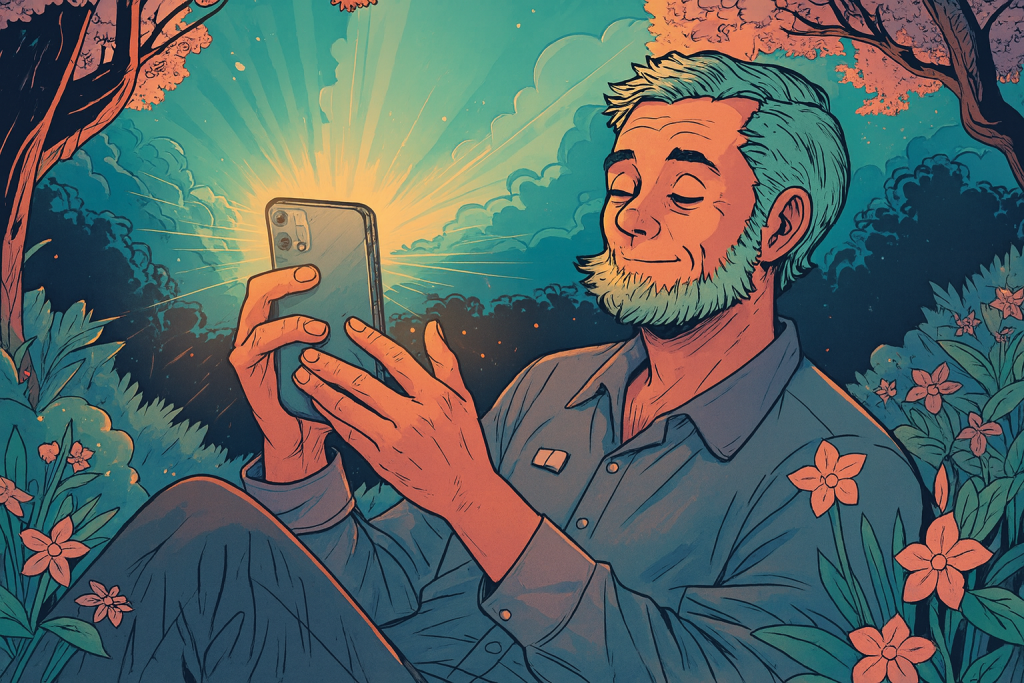
The notification pops up on my phone: “Jason, we’ve created a new Memory Reel for you.” I stop whatever I’m doing, perhaps something stressful related to a deadline or expiration, and feel that familiar flutter of excitement. Which chapter of my life has Google decided to surprise me with today?
I tap the notification, and suddenly I’m watching years of Father’s Day adventures unfold. It started by accident – a trip to the Buffalo Zoo on Father’s Day that somehow became our tradition. Instead of buying me something I didn’t really need, we chose experiences. Year after year, we’ll visit a new aquarium or zoo.
At the Erie Zoo I have a three-year-old son, who is barely tall enough to see over the penguin exhibit barrier. The same five-year-old boy at the Baltimore Aquarium was tentative but very happy as he touched a stingray for the first time. Then six at the Philadelphia Zoo, taking into account the fact that there’s a tube system where some of the big cats can walk uphill.
Buffalo, Erie, Philadelphia, Baltimore, Charleston. We mapped out Father’s Days on the Eastern Seaboard without much of a plan. A lot of time has passed since we started. My son has grown tall, lost his teeth, found his voice. I’m bald, maybe a little softer around the edges. But year after year we are choosing moments over things.
We tell ourselves to create experiences instead of accumulating stuff, but just how important this choice is doesn’t really succeed unless you take it back. Here was the proof: a memory bank I didn’t even realize we were building one Father’s Day adventure at a time.
Waves of emotions arise. Pure joy at their excitement about feeding the stingrays, pure joy at seeing their younger selves discover jellyfish for the first time, immense gratitude for each of our visits. This ninety second reel has become the antidote to my current stress.
And then it hits me. My phone accidentally became my therapist.
When technology gets it right
I never wanted Google Photos to be part of my self-care practice. Like most people, my wife and I take hundreds of photos without much thought, storing them in digital storage. In fact the idea of organizing them or seeing them on a regular basis seems overwhelming. I feel as if there are thousands of images scattered across years of life.
But then technology stepped in with an unexpected gift. These automatic memory reels began to appear, playing my own life back to me in complete emotional parts. Not a whole awesome collection, just “remember this?” A gentle presentation of.
At first, I was skeptical. Just another way for a tech company to keep me glued to my screen when I regularly looked for ways to escape. But as these memory notifications became part of my daily routine, I realized that something deeper was happening. Google’s algorithms had accidentally created something I never knew I needed: regular reminders of how blessed my life has been.
The beauty is in the element of surprise. I’m not looking for specific photos when I’m feeling sad. This can sometimes backfire, making me feel more depressed or sad. Instead, these curated moments come when I least expect it, like getting a message from an old friend you haven’t heard from in a while.
science of digital memory
Research shows that positive memories (deliberately recalling pleasant memories) can significantly improve mood and reduce stress. When we connect with positive memories, our brain releases dopamine and activates the same neural pathways associated with the original experience. We literally get to relive moments of joy.
Visual memories are especially powerful. Studies in cognitive psychology show that images produce stronger emotional responses and more vivid recall than other types of memory cues. When we look at a photo of a happy time, we don’t just remember that moment. We can almost feel ourselves back there.
Nostalgia, once thought to be a purely nostalgic emotion, is now thought to be a powerful mood regulator. Research from the University of Southampton shows that reflection on old memories increases feelings of social connectedness, boosts self-esteem and provides a sense of meaning and continuity in our lives.
But what makes these digital memory reels especially effective is that they are unpredictable and brief. Unlike deliberately scrolling through old photos (which can sometimes lead to contemplation or sadness), these automatic highlights come as a pleasant surprise and are finished before we get overwhelmed.
The timing is also often good. These notifications emerge in everyday moments, such as waiting in line, taking a break from work, sitting in traffic. Just when we need a little perspective on what really matters.
emotional threshold of remembering
Not every memory reel is hit the same way. Some make me laugh out loud, like my son’s variety of increasingly elaborate Halloween costumes or the series of failed attempts to get a decent group photo at our destination wedding. Others bring that “pleasant sadness” that I have come to appreciate…looking at my grandmother in photos from a few years ago, her smile was still bright even when her health was declining.
Then there are the reels that make me feel deeply grateful. That random afternoon when we decided to try goat yoga. A collection of action shots over the years: chasing my son around the house in a homemade superhero costume, his skateboarding phase, meeting up with friends we haven’t seen in a while. These aren’t momentous occasions, just testament to a life full of small adventures and genuine relationships.
What strikes me most is how these photographs capture a joy I might have forgotten. In the daily routine of parenting, working, and managing life, it’s easy to miss the stress and overlook the sweetness. But here’s the photographic proof: We really did have a lot of fun together.
The reels remind me that while life hasn’t been all butterflies and rainbows, the good has consistently outweighed the hard times. The visual evidence is overwhelming. We have been blessed again and again in ways both big and small.
Embracing Digital Self-Care
I’ve learned to treat these memory prompts as legitimate self-care appointments. When that notification pops up, I stop whatever I’m doing and give it my full attention. No multitasking, no rushing. I allow myself to feel whatever comes up. The giggles, the happiness, the sadness, the extreme gratitude.
Sometimes time seems almost magical. The day my social anxiety took over because I had to present during three separate meetings, a reel appeared featuring peaceful moments from a trip my wife and I took to Newport, Rhode Island (mostly so I could try a lobster roll). When I was worried about whether I was doing enough as a parent, I was treated to a compilation of my son’s biggest smiles over the years.
It’s become a type of mindfulness I never planned for. These brief interruptions take me out of the current worry and remind me of the bigger picture. They are proof that I have been there for the beautiful moments, that I have prioritized what matters, that love has been the constant thread running through our ordinary days.
The memory bank we don’t realize we’re building
At that time, Father’s Day trips to the zoo seemed routine. We just did something because that’s what families do on special days. I wasn’t thinking about creating lasting memories or traditions. I was just trying to make sure my son had a good day.
But now I see what we were doing, and that was making deposits into a memory bank that would pay dividends years later. Each photo was evidence of intention, of pretense, of choosing happiness, even when life seemed heavy.
The beauty of these digital memory reels is that they reveal patterns that we can’t see in real time. They show us that we are more intentional than we thought, more present than we realized, more blessed than our current mood might suggest.
automatic gift of gratitude
In a world where technology often makes us feel more anxious and isolated, these memory reels offer something different: automated gratitude practices. They are gentle reminders to stop and appreciate not only where we are, but where we have been.
There is no need to make apps or habit to download them. They come like grace just when we need them most.
So, the next time you get one of those memory notifications, stop. Allow yourself to be surprised by your happiness. Look for evidence of love in your life. Big moments and especially small moments. Notice how much good has happened even during life’s inevitable challenges.
There’s more to your phone than photos. This is a testament to how blessed your life has been.
And sometimes, that’s the reminder we need to keep building that memory bank, one normal, beautiful day at a time.

About Jason Hall
Jason Hall is a writer, mental wellness advocate, and professional overthinker who believes in the power of imperfection, a well-timed joke, and the occasional snack-fueled epiphany. He writes about finding light in the middle of life’s chaos and the small, stubborn joys that help us move forward. you can find it here chilltheducout.comWhere he shares stories about stress, hope, growth and how-to calm the duck One microjoy at a time.
